
Imagine stepping into a trendy, upscale restaurant with your significant other, excited to savor an experience that promises both culinary art and a night to remember. The ambient lighting, minimalist decor, and eclectic music set the stage for what should be a memorable dining experience. Yet, as the evening unfolds, expectations clash with reality, and a single meal spirals into a full-blown debacle. The anticipation of gourmet delights gives way to shock and frustration when the portions served are more akin to appetizers than entrées.
On this particular night, a couple in their late twenties embarks on an adventure at a fancy new spot in the city. With high hopes and an appetite for quality, they are quickly confronted with dishes that not only break the bank but also fall drastically short in size. What begins as an evening of culinary exploration turns into a heated discussion over what exactly constitutes an entrée in fine dining—and whether a dinner meant to impress can inadvertently set the stage for a public relations nightmare.
AITA for refusing to pay at a restaurant that was false advertising?’
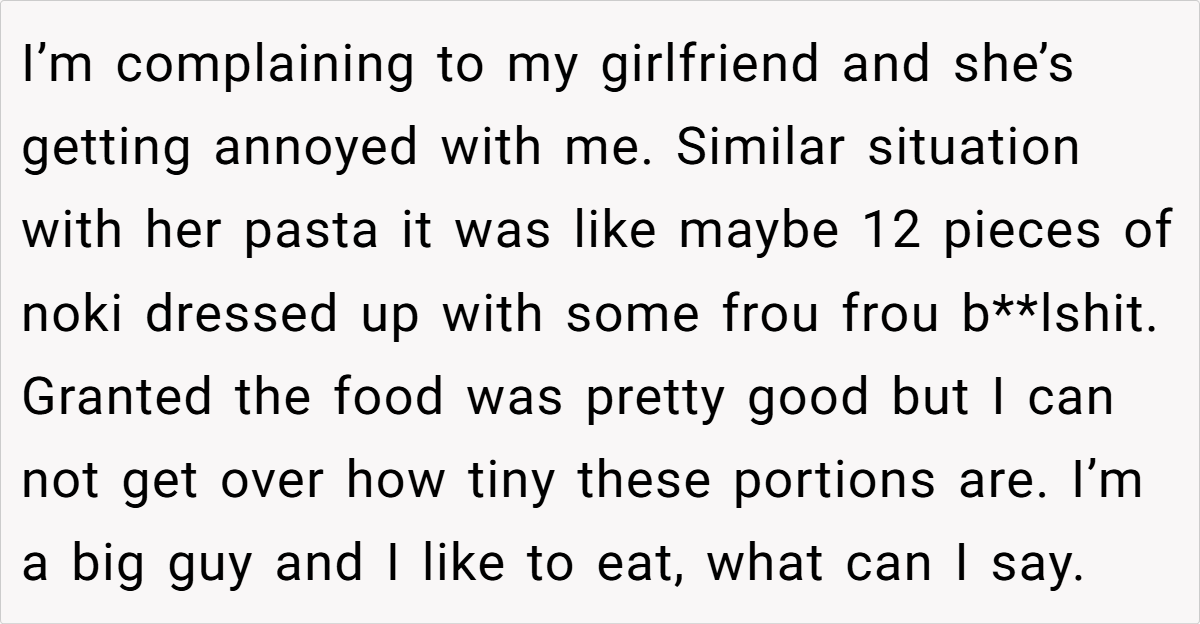
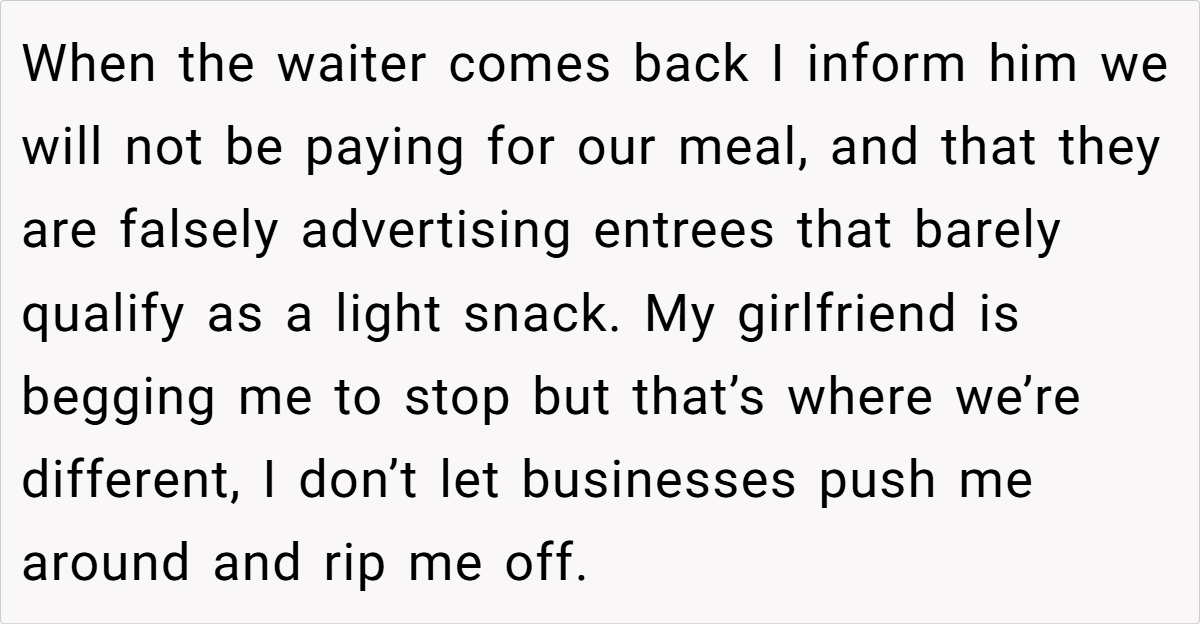
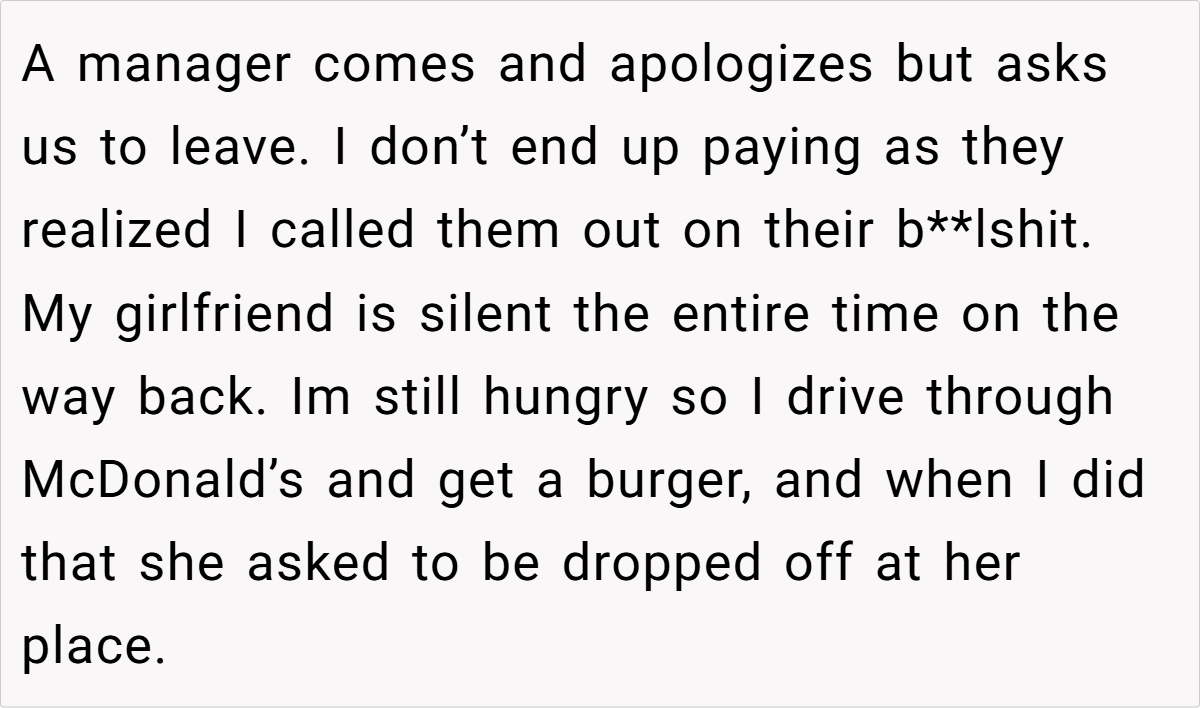
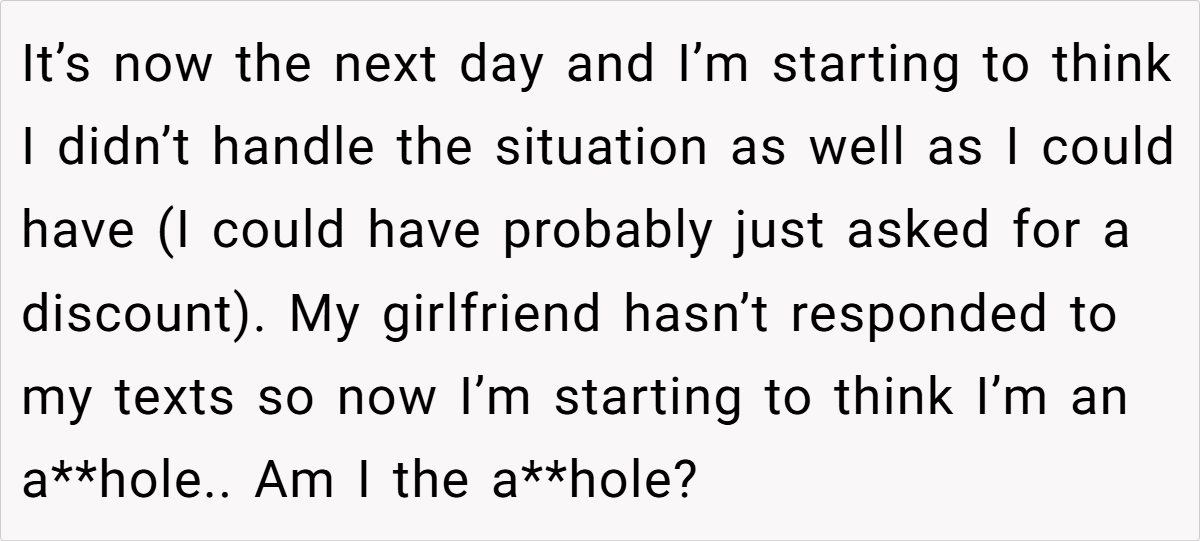
Letting a dining experience devolve into a showdown over portion sizes is not uncommon, especially when expectations are built on the assumption of value for money. According to renowned chef and television personality Gordon Ramsay, “Fine dining isn’t about the quantity on your plate—it’s about the quality and the artistry behind it” (). Ramsay’s insight reminds us that upscale restaurants often focus on flavor intensity and presentation rather than providing generous servings.
That said, the frustration felt by the OP is understandable. When a meal that costs over $60 ends up feeling like a light snack, it’s easy to feel cheated out of a full dining experience. While many fine dining establishments design their menus around the idea of tasting menus and shared plates, the expectation of an entrée that can sustain hunger is still prevalent for many diners. The OP’s reaction, though extreme, reflects a broader disconnect between traditional expectations of a meal and the modern approach of culinary minimalism.Moreover, when the restaurant’s concept isn’t communicated clearly, it can lead to significant disappointment. A crucial element of dining—especially in establishments charging premium prices—is setting the right expectation. Expert food critic and author Michael Ruhlman notes that “transparency in menu design is key to ensuring that guests know they’re in for an experience rather than a conventional meal” (). In this instance, the ambiguity of what constitutes an “entrée” led to a misunderstanding that quickly escalated.Additionally, the OP’s decision to refuse payment further complicated the situation. While the sentiment of being taken advantage of is palpable, most experts agree that addressing issues with a calm discussion might yield better outcomes.
